Year
2023
Client
Me!
Category
Card Game
Role
Product Designer
Year
2023
Client
Me!
Category
Card Game
Role
Product Designer
Year
2023
Category
Card Game
Client
Me!
Role
Product Designer
Overview
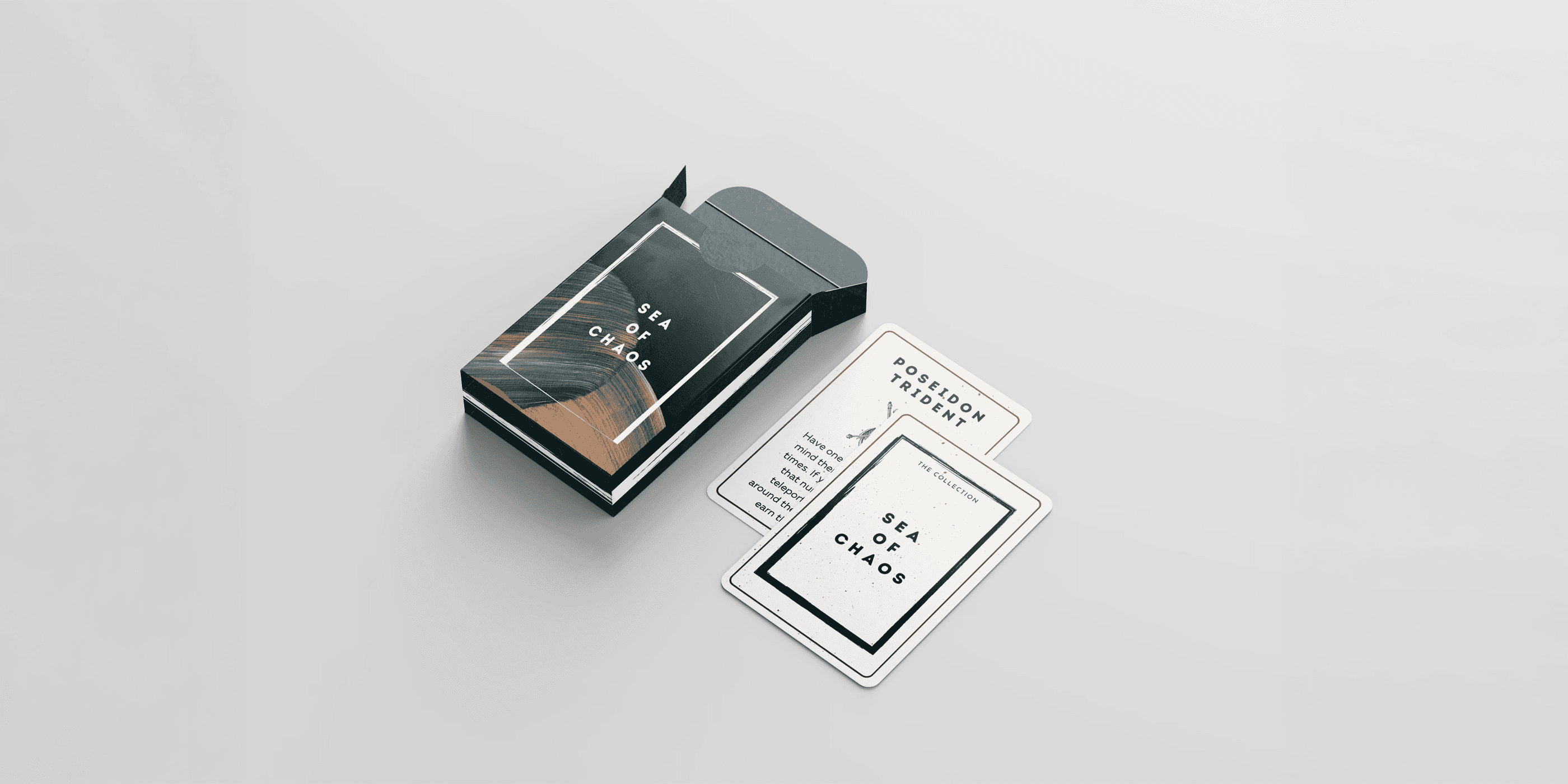
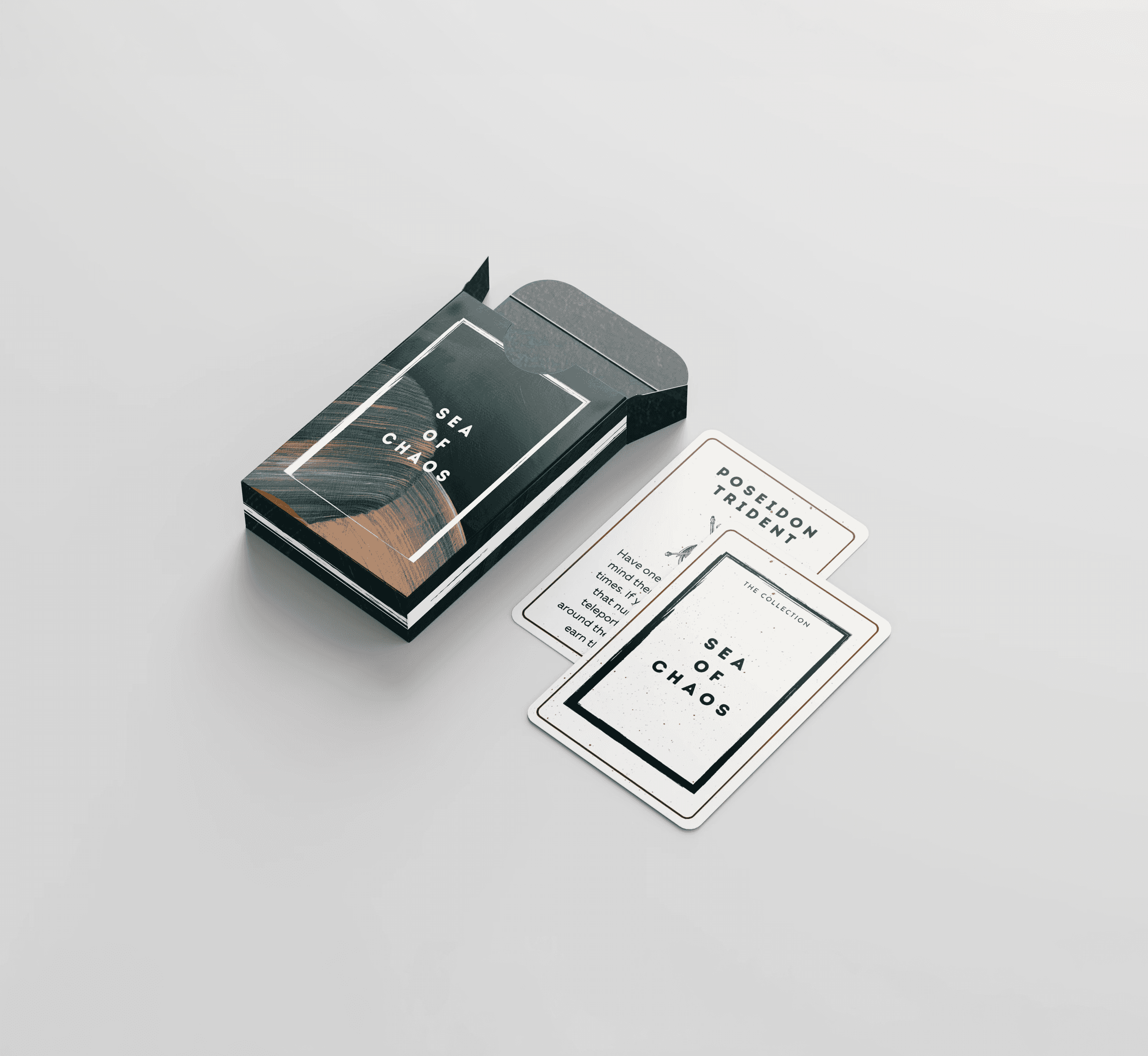
A single-player, print-and-play card game entirely created by me. My goal with this project was to design a fun and engaging solo experience that players can enjoy and replay multiple times.
Overview
A single-player, print-and-play card game entirely created by me. My goal with this project was to design a fun and engaging solo experience that players can enjoy and replay multiple times.
Overview
A single-player, print-and-play card game entirely created by me. My goal with this project was to design a fun and engaging solo experience that players can enjoy and replay multiple times.
Product Goals
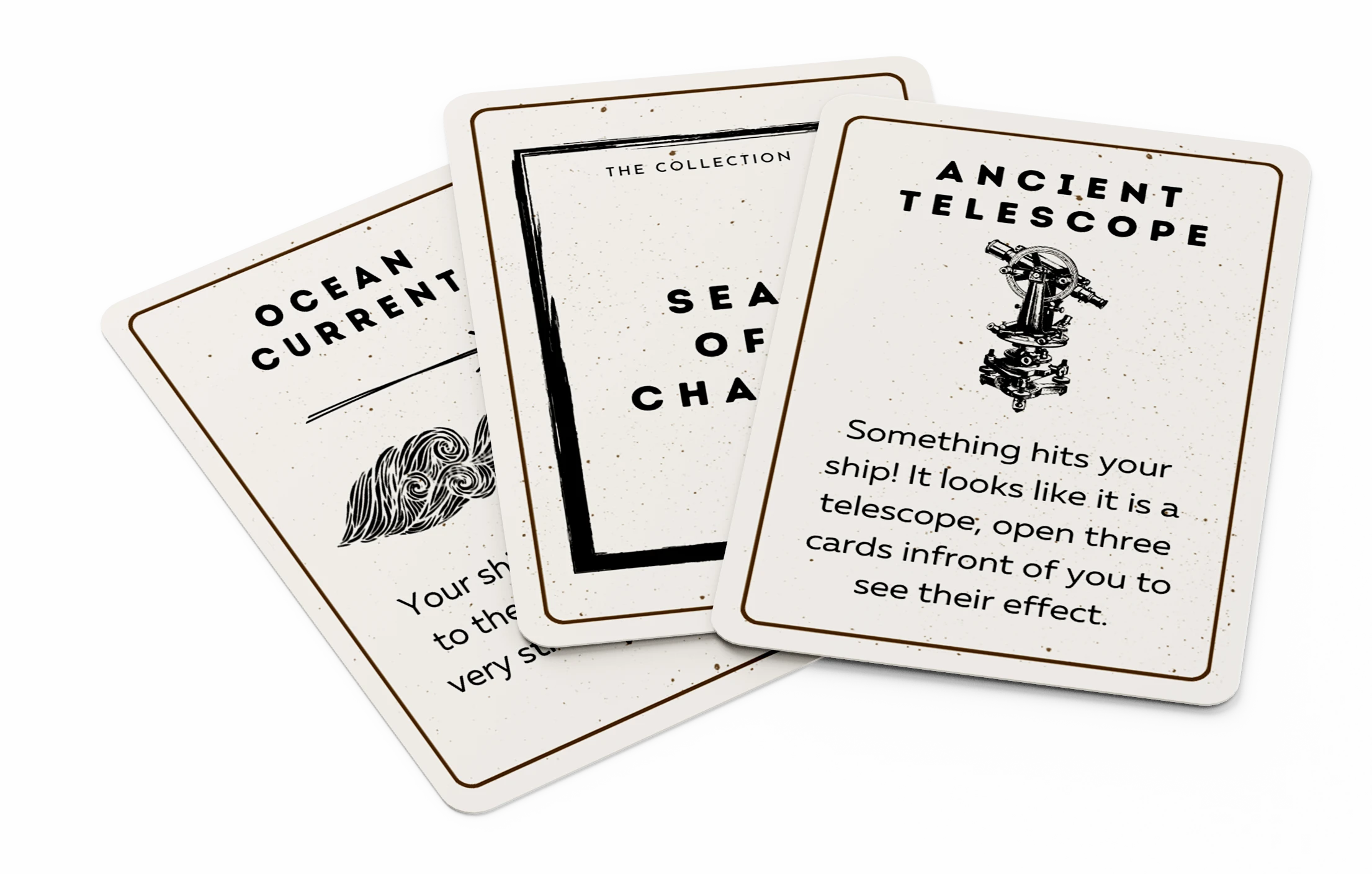
My goal with this card game was to create an enjoyable single-player experience that’s fun to replay.
Inspired by the excitement of rolling dice in Snakes and Ladders, I wanted to recreate that same thrill through random card flipping. Each game generates a new pattern, making players feel eager and excited with every card they reveal.
Product Goals
My goal with this card game was to create an enjoyable single-player experience that’s fun to replay.
Inspired by the excitement of rolling dice in Snakes and Ladders, I wanted to recreate that same thrill through random card flipping. Each game generates a new pattern, making players feel eager and excited with every card they reveal.
Elevator Pitch
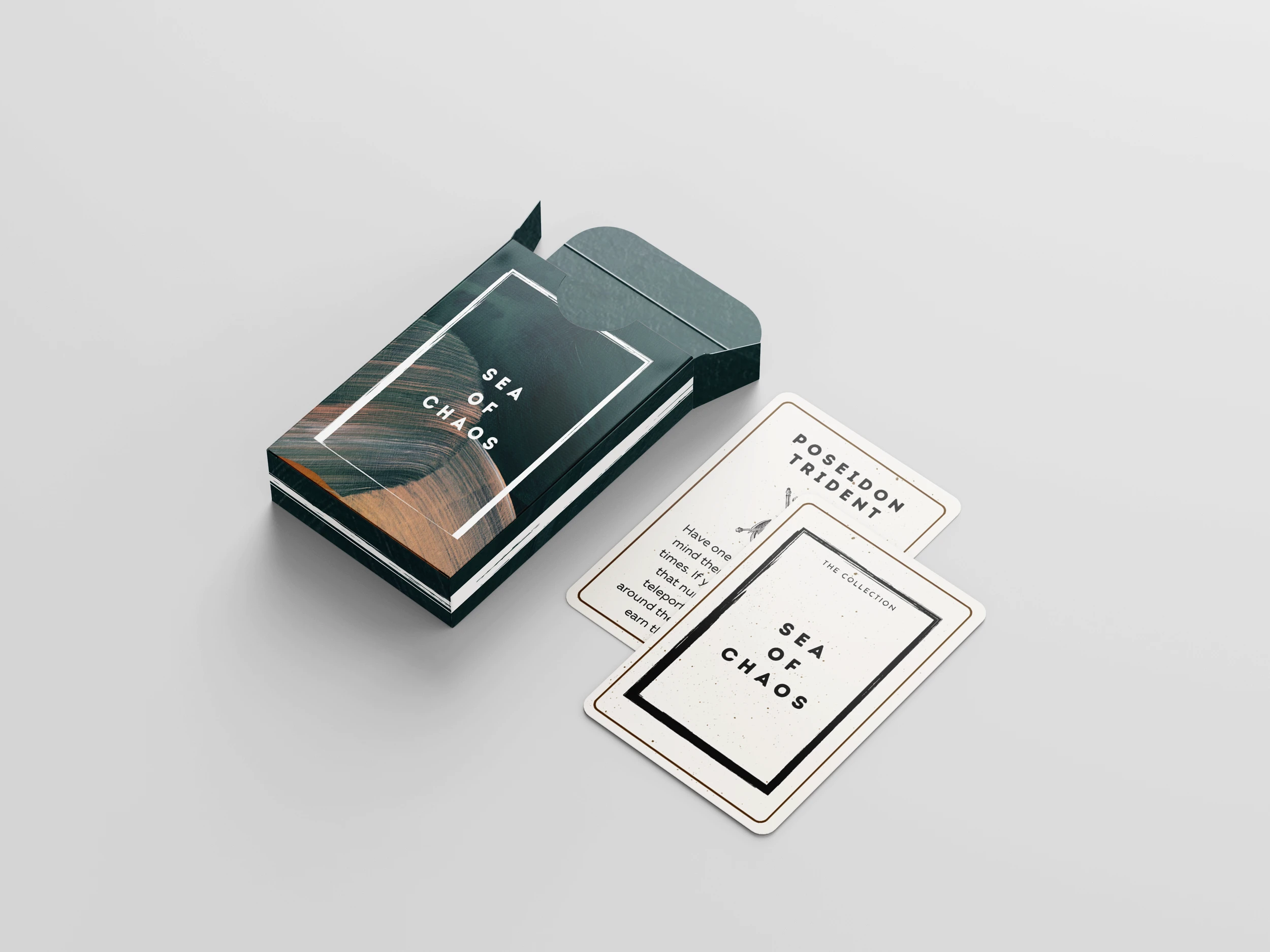
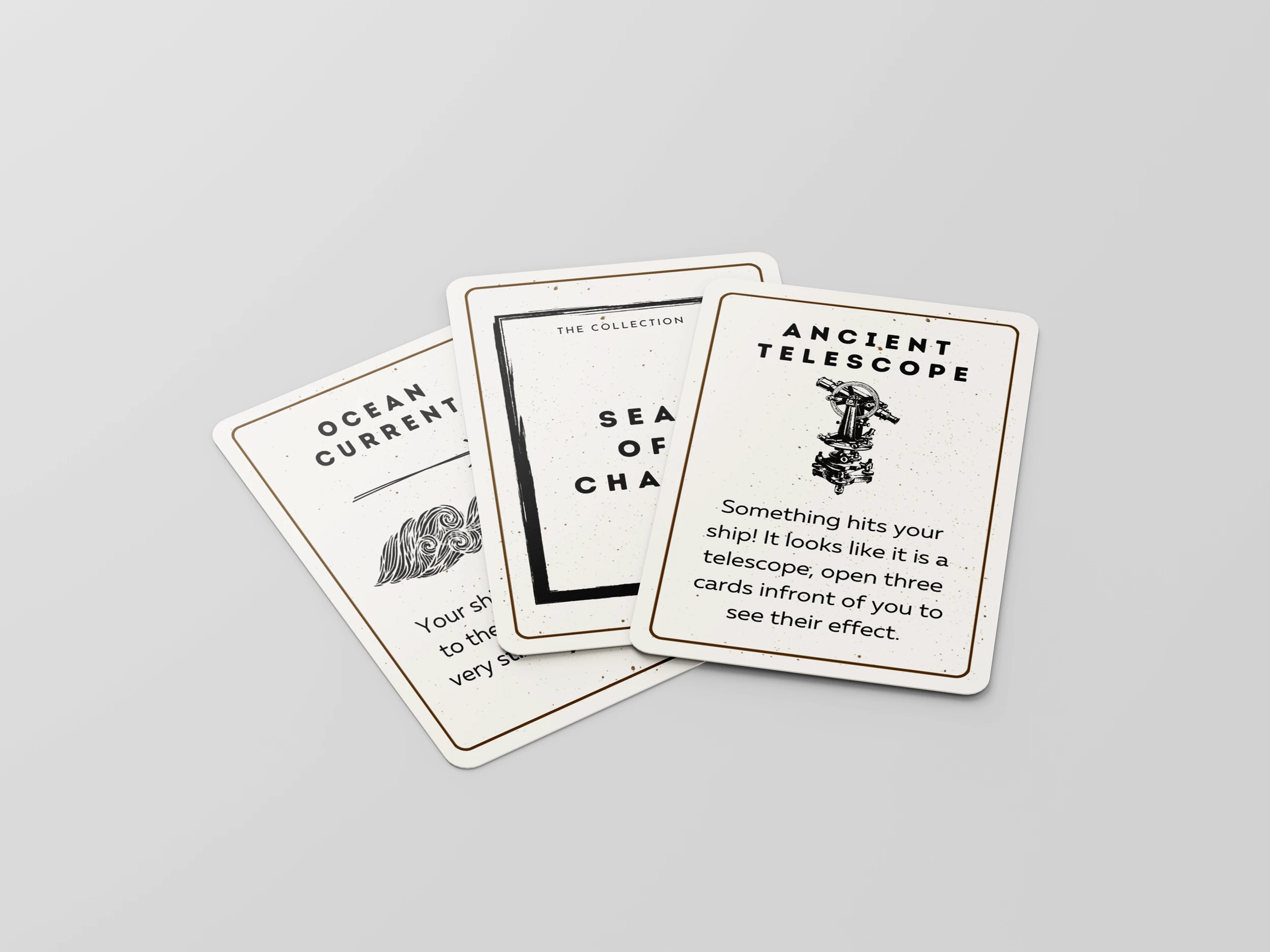
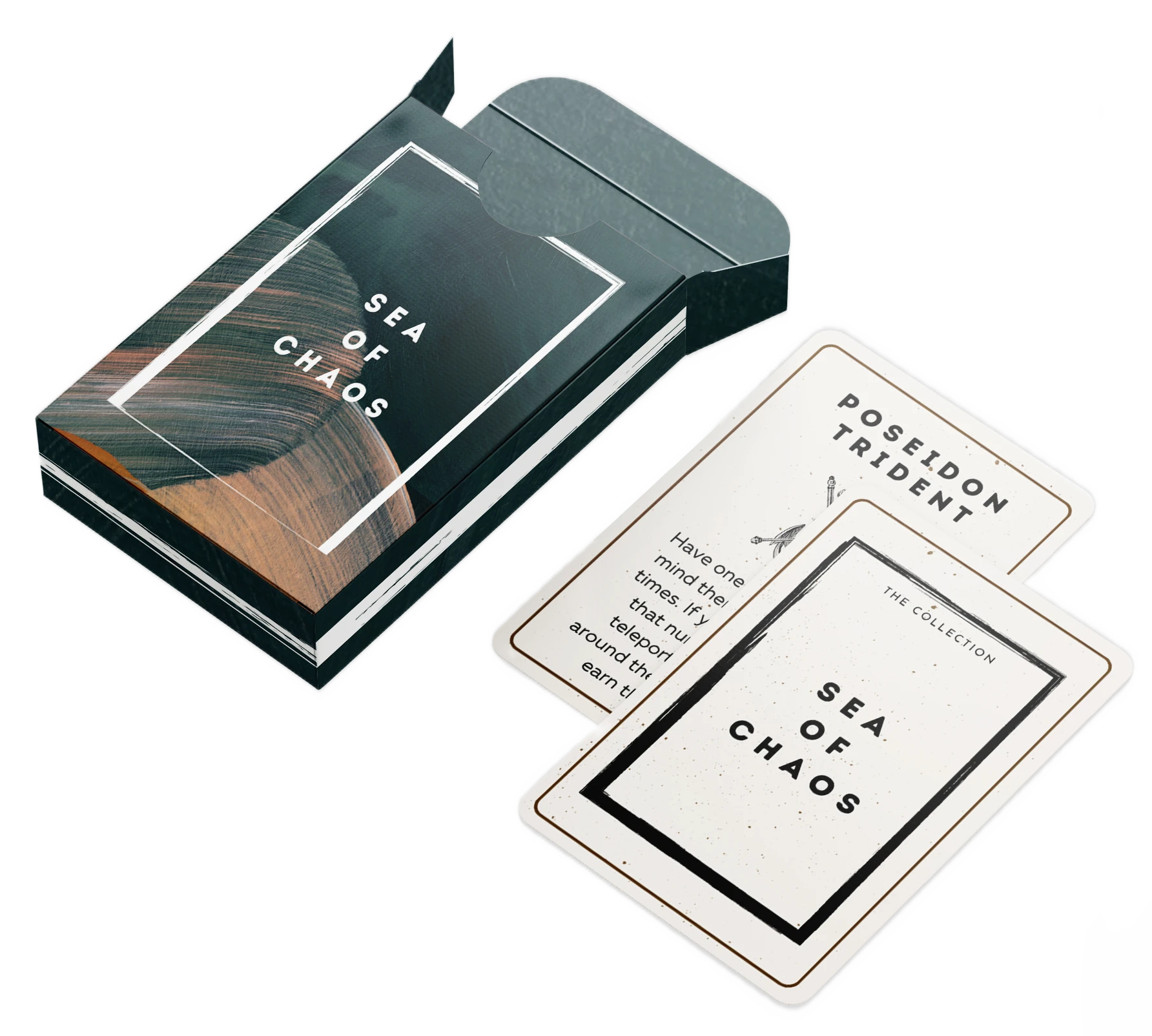
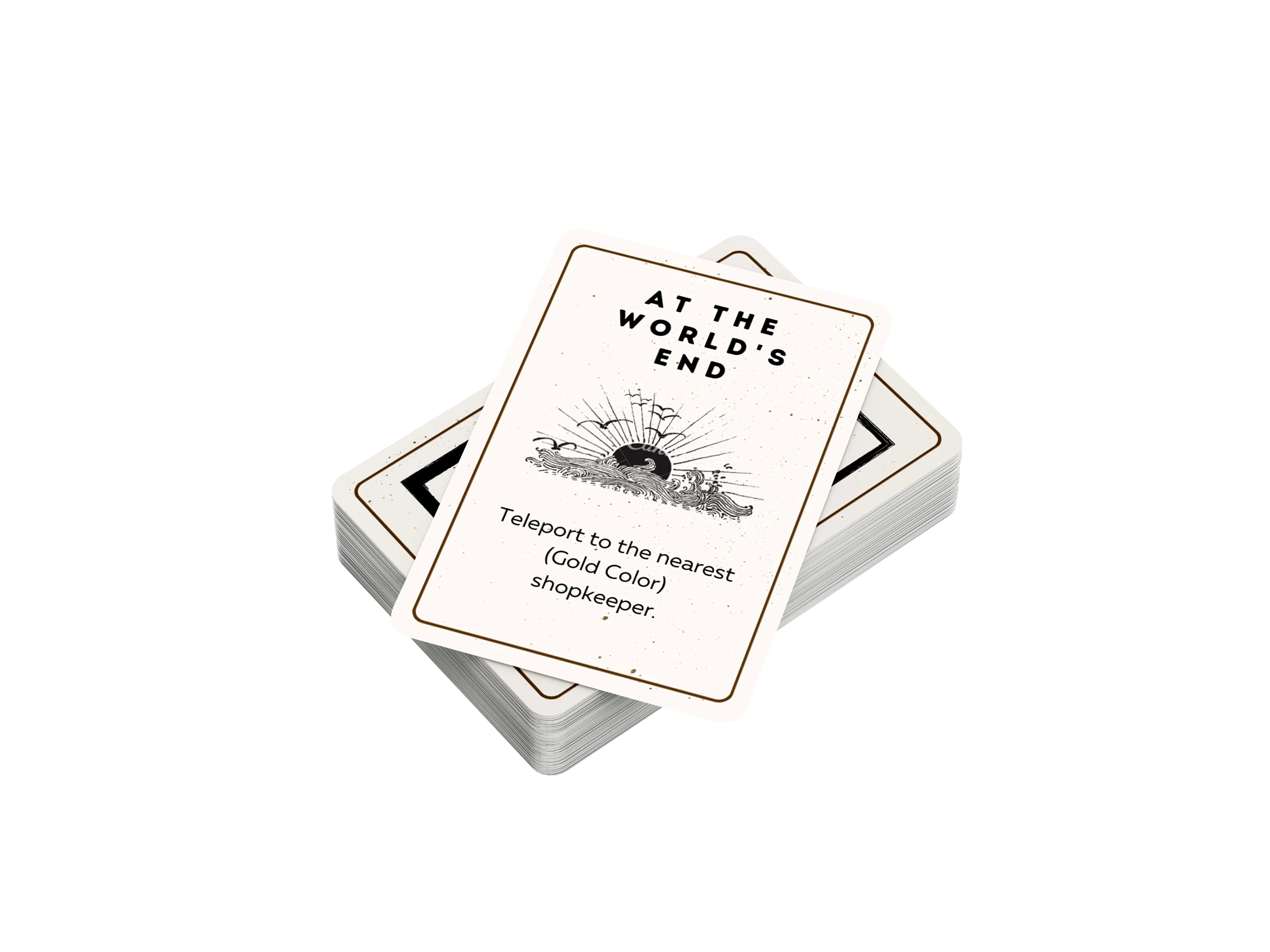
Sea of Chaos is a strategic card game that forces you to carefully balance greed with survival.
The experience relies on a dopamine-driven loop of resource management and randomized encounters during a treacherous two-way journey. Every choice matters, from the direction you sail to how you spend your gold at the shopkeeper. Can you reach the island and return alive, or will you lose your ship?
Problem & Solution
-
0
1
Problem:
Most Players Were Ignoring the Shopkeepers
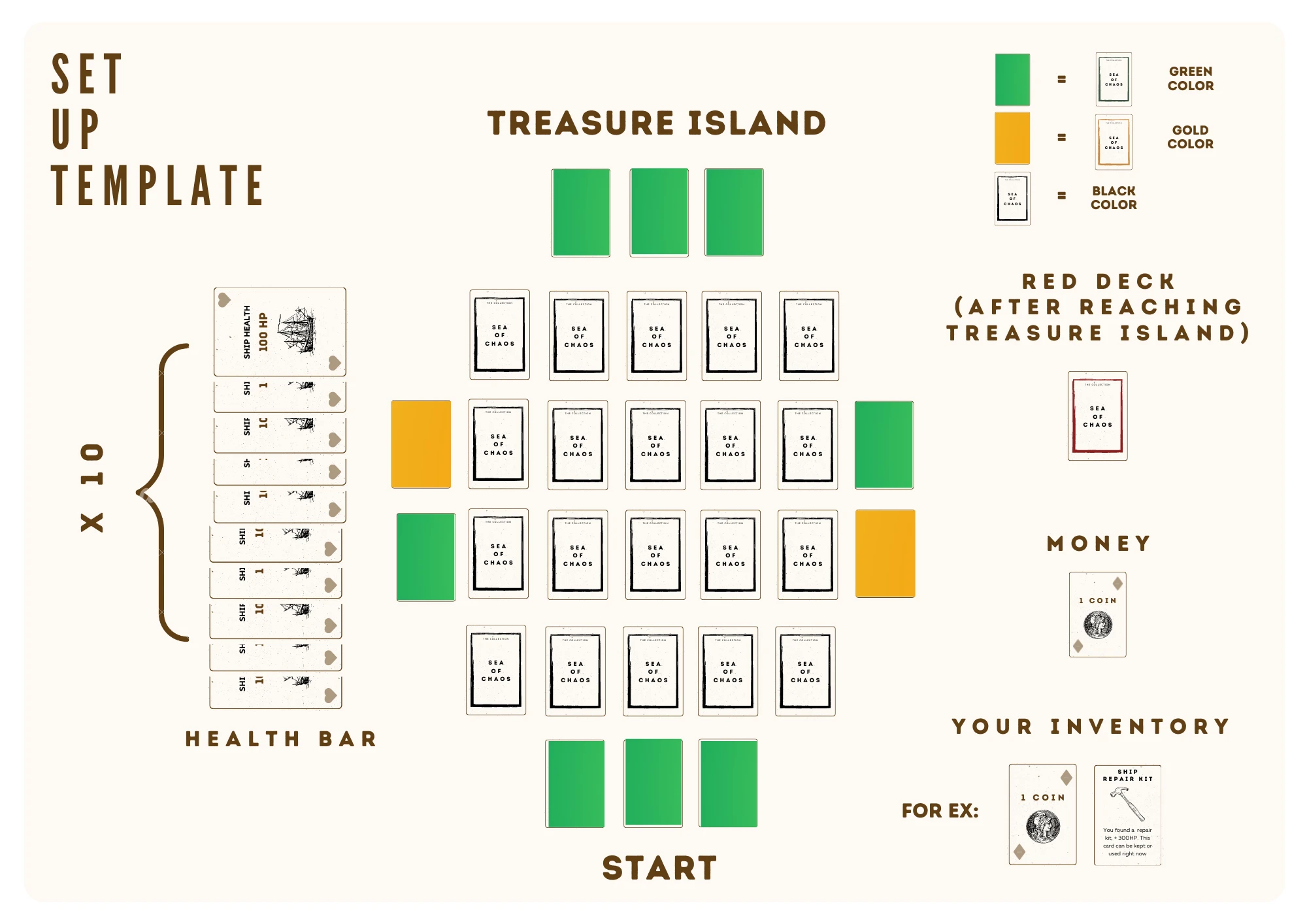
There wasn't a strong reason for players to go out of their way to talk to them, which made the shopkeepers feel optional rather than essential. My goal was to redesign their role to make them a core part of the gameplay experience.
Solution:
Two-phase Deck System to Balance Fun with Tension
The first round is for earning money, and the second round is for spending it to survive. I integrated the shopkeeper into this loop by making them the primary way for players to heal. By placing them on the side paths, I gave players a strong reason to detour and explore instead of just going straight. This makes every movement feel more meaningful and exciting for the player.
Problem & Solution
-
0
1
Problem:
Most Players Were Ignoring the Shopkeepers
There wasn't a strong reason for players to go out of their way to talk to them, which made the shopkeepers feel optional rather than essential. My goal was to redesign their role to make them a core part of the gameplay experience.
Solution:
Two-phase Deck System to Balance Fun with Tension
The first round is for earning money, and the second round is for spending it to survive. I integrated the shopkeeper into this loop by making them the primary way for players to heal. By placing them on the side paths, I gave players a strong reason to detour and explore instead of just going straight. This makes every movement feel more meaningful and exciting for the player.
Problem & Solution
-
0
1
Problem:
Most Players Were Ignoring the Shopkeepers
There wasn't a strong reason for players to go out of their way to talk to them, which made the shopkeepers feel optional rather than essential. My goal was to redesign their role to make them a core part of the gameplay experience.
Solution:
Two-phase Deck System to Balance Fun with Tension
The first round is for earning money, and the second round is for spending it to survive. I integrated the shopkeeper into this loop by making them the primary way for players to heal. By placing them on the side paths, I gave players a strong reason to detour and explore instead of just going straight. This makes every movement feel more meaningful and exciting for the player.
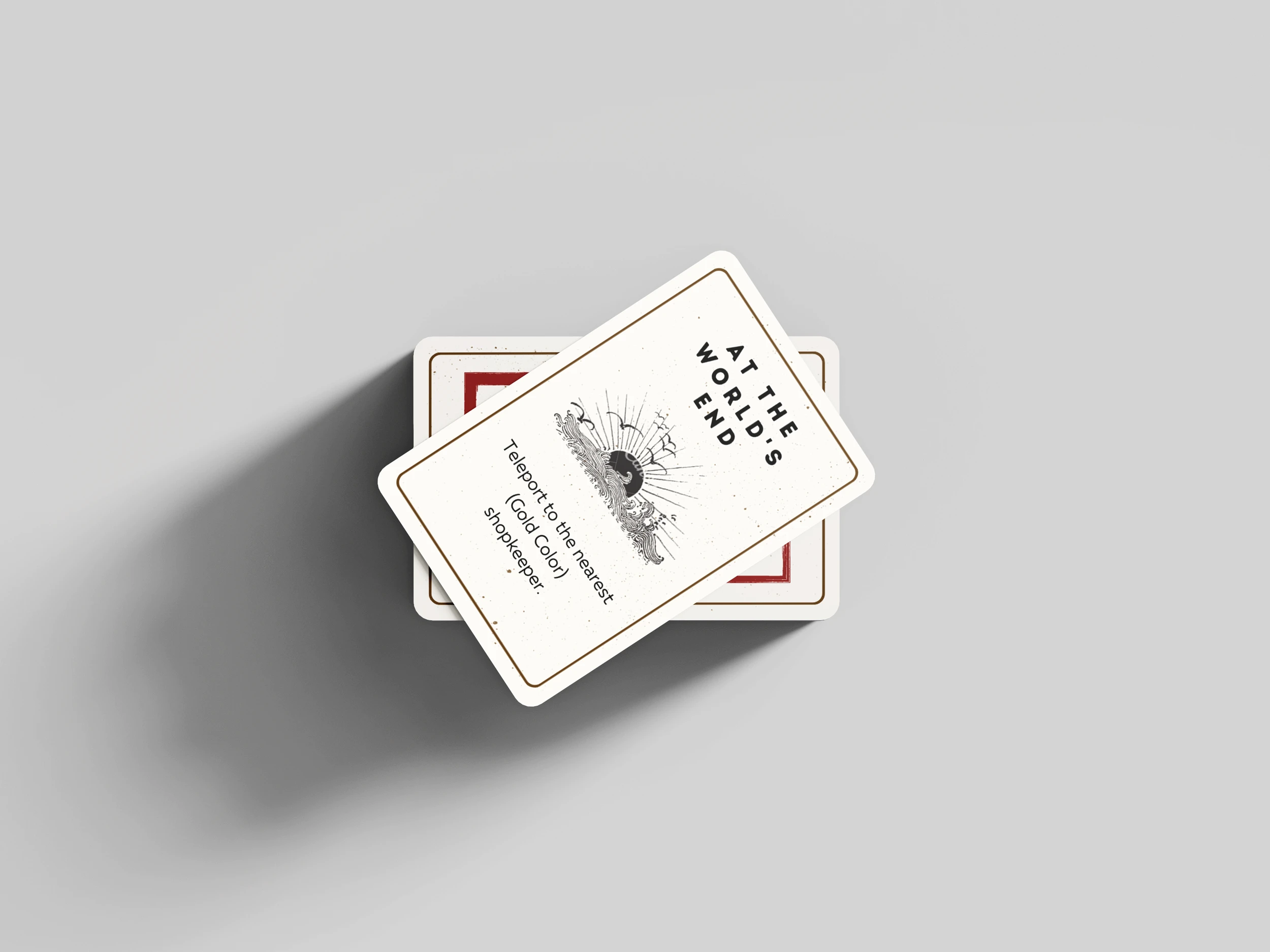
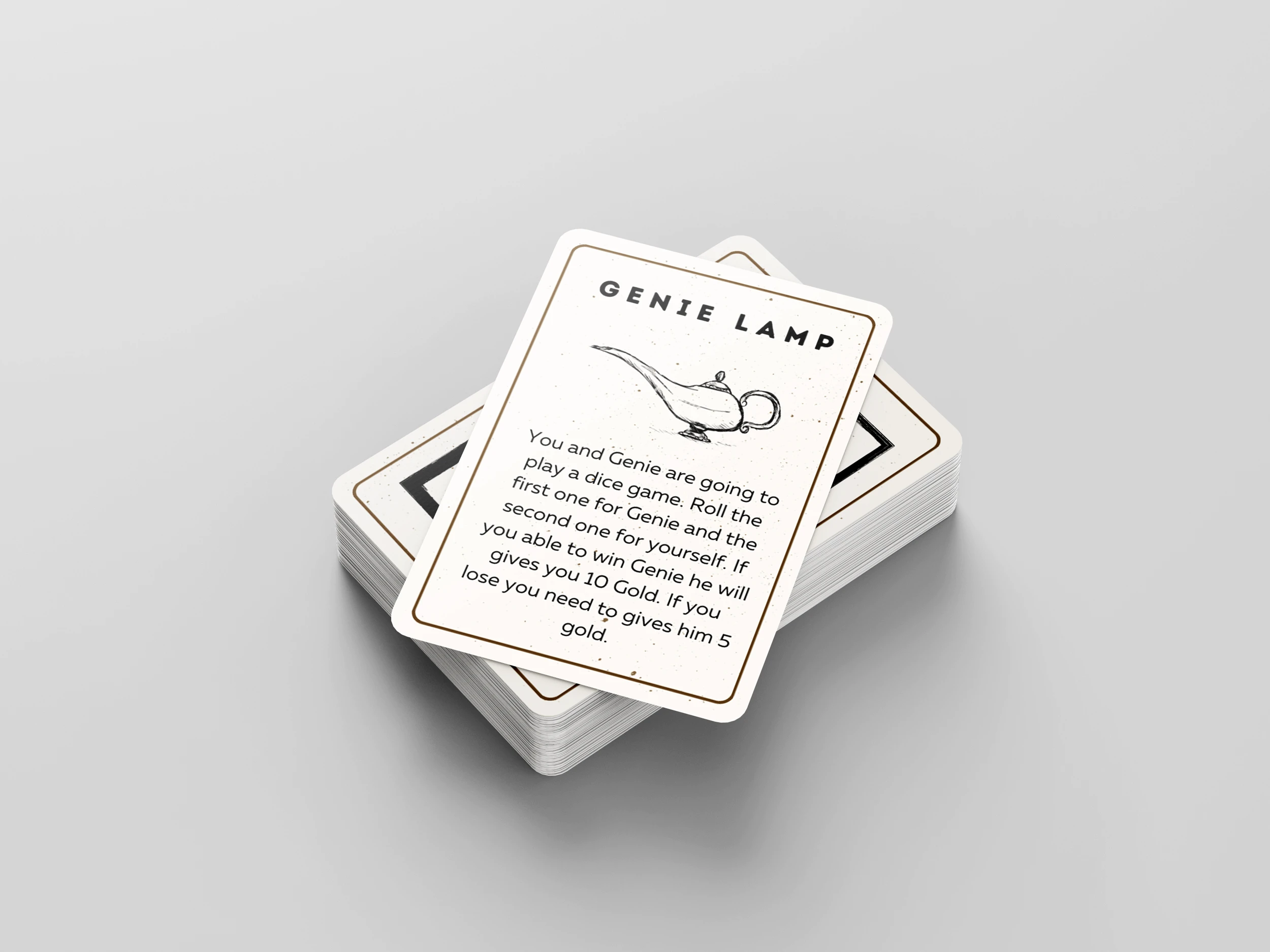
Cards Layout Example (Gold Card = Shopkeeper)
Impact
Increased Strategic Exploration: 7/12 of playtesters chose side paths more often to visit shopkeepers instead of just moving in a straight line.
Boosted Character Value: 10/12 of playtesters identified the shopkeeper as the most important card to find during the survival phase.
Impact
Increased Strategic Exploration: 7/12 of playtesters chose side paths more often to visit shopkeepers instead of just moving in a straight line.
Boosted Character Value: 10/12 of playtesters identified the shopkeeper as the most important card to find during the survival phase.
Impact
Increased Strategic Exploration: 7/12 of playtesters chose side paths more often to visit shopkeepers instead of just moving in a straight line.
Boosted Character Value: 10/12 of playtesters identified the shopkeeper as the most important card to find during the survival phase.
Problem & Solution
-
0
2
Problem:
Many Cards Had One-time Effects That Lacked Depth
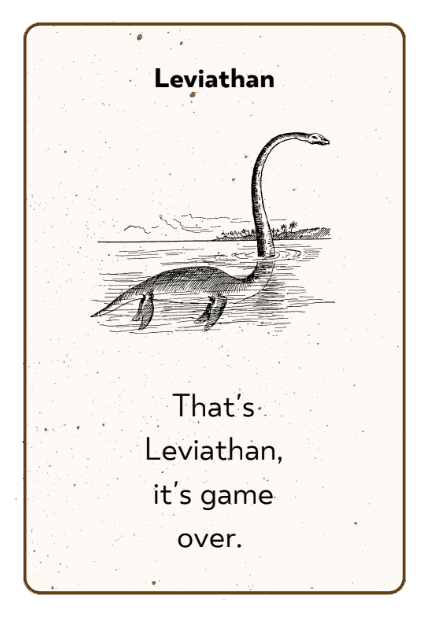
One critical example was the 'Leviathan' card, which possessed an instant 'game over' mechanic. In a playtest, a participant drew this card on their very first turn. The sudden and unavoidable loss felt deeply unfair, leading them to abandon the game entirely, a result that directly contradicted my core goal of creating a highly replayable experience.
Solution:
Remove Instant-loss Mechanics
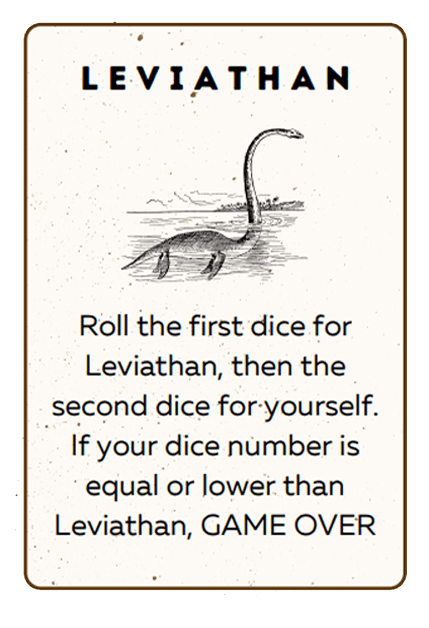
For example, I redesigned the Leviathan card so it no longer ends the game automatically. Now, players must win a dice-roll battle to survive. This gives the player a chance to interact with the card and try to beat the odds instead of losing immediately to bad luck. Additionally, cards with harsh effects like this will no longer appear in the first round (Black Deck). They are now introduced during the second round (Red Deck) to ensure the early game remains accessible.
Problem & Solution
-
0
2
Problem:
Many Cards Had One-time Effects That Lacked Depth
One critical example was the 'Leviathan' card, which possessed an instant 'game over' mechanic. In a playtest, a participant drew this card on their very first turn. The sudden and unavoidable loss felt deeply unfair, leading them to abandon the game entirely, a result that directly contradicted my core goal of creating a highly replayable experience.
Solution:
Remove Instant-loss Mechanics
For example, I redesigned the Leviathan card so it no longer ends the game automatically. Now, players must win a dice-roll battle to survive. This gives the player a chance to interact with the card and try to beat the odds instead of losing immediately to bad luck. Additionally, cards with harsh effects like this will no longer appear in the first round (Black Deck). They are now introduced during the second round (Red Deck) to ensure the early game remains accessible.
Problem & Solution
-
0
2
Problem:
Many Cards Had One-time Effects That Lacked Depth
One critical example was the 'Leviathan' card, which possessed an instant 'game over' mechanic. In a playtest, a participant drew this card on their very first turn. The sudden and unavoidable loss felt deeply unfair, leading them to abandon the game entirely, a result that directly contradicted my core goal of creating a highly replayable experience.
Solution:
Remove Instant-loss Mechanics
For example, I redesigned the Leviathan card so it no longer ends the game automatically. Now, players must win a dice-roll battle to survive. This gives the player a chance to interact with the card and try to beat the odds instead of losing immediately to bad luck. Additionally, cards with harsh effects like this will no longer appear in the first round (Black Deck). They are now introduced during the second round (Red Deck) to ensure the early game remains accessible.
Before
After
Impact
10 out of 12 players said they wanted to play again even after losing, specifically because they felt they had a real chance to survive and that they had almost beaten the game.
Impact
10 out of 12 players said they wanted to play again even after losing, specifically because they felt they had a real chance to survive and that they had almost beaten the game.
Impact
10 out of 12 players said they wanted to play again even after losing, specifically because they felt they had a real chance to survive and that they had almost beaten the game.
Pictures